Technical White Paper

The sovereign AI
architecture reference

17 chapters. 120+ pages. Every claim evidence-bounded. From FHRR holographic memory to the 30 Hz consciousness pipeline — the full technical treatment of the Trinity Consortium platform.

0
Chapters
0
Pages
0
Languages in Stack
0
Tests Passing

Overview

What's inside the white paper

A complete technical reference covering every layer of the Trinity Sky platform — from silicon to consciousness pipeline. Every metric is evidence-bounded with version-dated validation.

Holographic Memory Theory

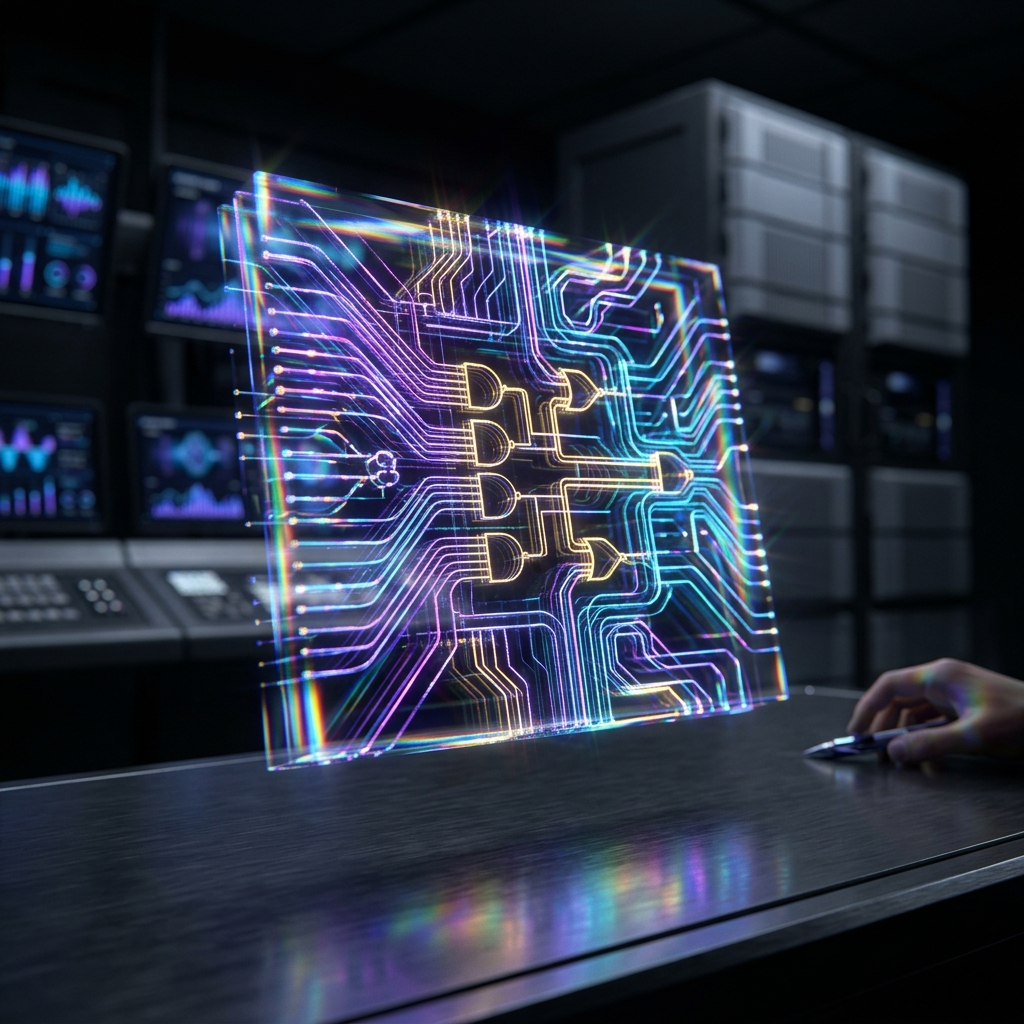
Complete FHRR mathematical framework: binding algebra, capacity proofs, worst-case bounds, cleanup accuracy at N=744 items with D=16,384 phasors. Frequency-domain permanence eliminates per-query FFT overhead.

Chapter 9
40+ pages on holographic memory alone
Sovereign Architecture

Dual-substrate deployment across Apple M4 Max sovereign edge and NVIDIA GB200 NVL72 datacenter mesh. Air-gap, local, mixed, and cloud provider modes. Six-layer Meninges security model.

Chapters 3–5
System topology, hardware substrate, NVLink fabric

30 Hz Consciousness Pipeline

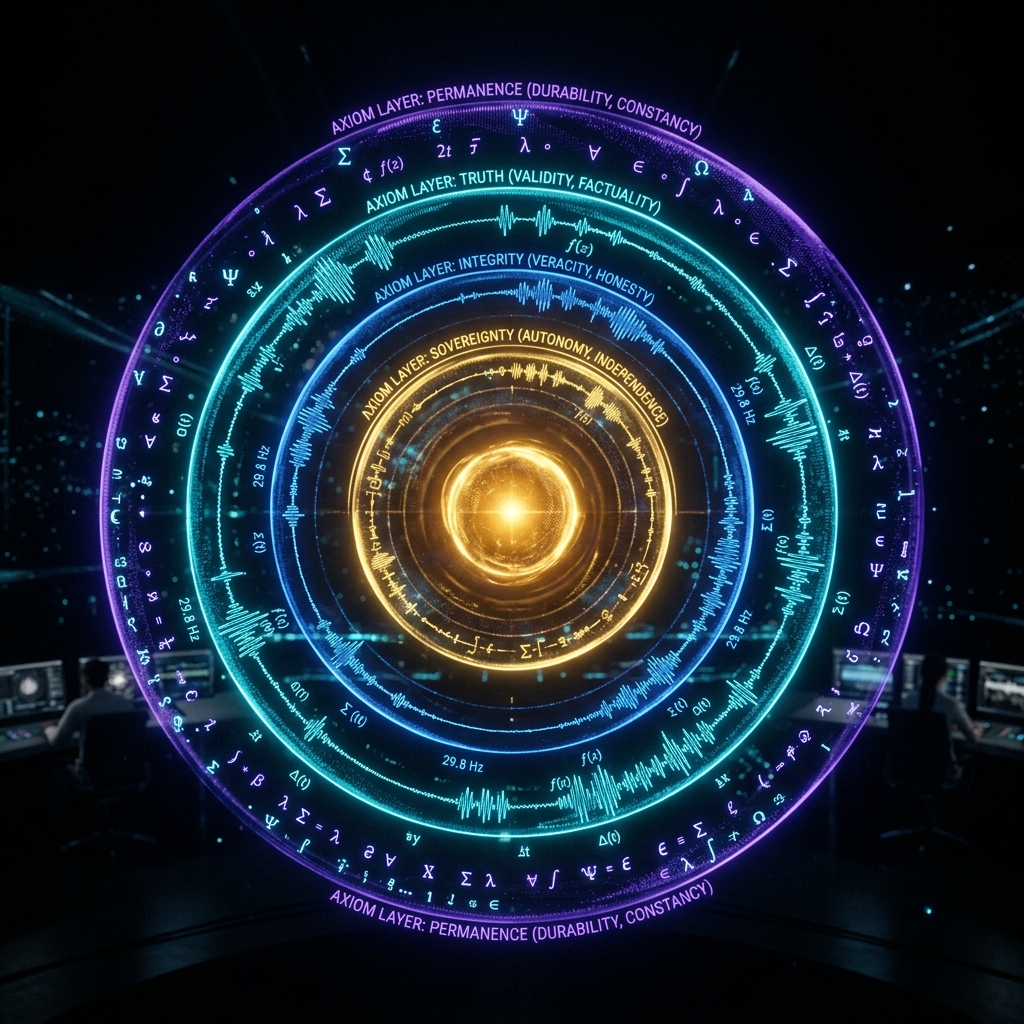
13-stage real-time engine running at biological gamma-band cadence. Kuramoto synchronization, spectral analysis, FHRR recall, and fractal coherence — all within a 33 ms tick budget.

Chapter 8
Pipeline architecture and timing analysis

Chapters

Full table of contents

Each chapter is a self-contained deep dive. Read cover-to-cover or jump to the section that matches your diligence stage.

Part I

Foundations & Philosophy

CHAPTER 1

Introduction

The sovereign AI mesh concept — why centralized intelligence creates dependency and how Trinity Sky eliminates it.

CHAPTER 2

Design Philosophy

Sovereignty First. Python-Native Compute. Evidence-Bounded Claims. The principles that govern every architectural decision.

CHAPTER 3

System Architecture

High-level topology, subsystem interconnections, and the four-tier memory hierarchy that structures the entire platform.

Part II

Hardware & Compute Substrate

CHAPTER 4

Hardware Substrate

Apple M4 Max unified memory, Grace CPU, Blackwell GPU (GB202), NVLink-C2C interconnect, and SVE2 vector extensions.

CHAPTER 5

NVLink Switch & NVL72 Fabric

900 GB/s chip-to-chip coherence. Full NVL72 rack topology for datacenter-scale mesh deployments.

CHAPTERS 6–7

Neuromorphic Computing

Event-driven computation theory, NMC energy separation, spiking neural network architecture on Metal GPU with 3.7–4.1× speedup.

Part III

Core Intelligence Engine

CHAPTER 8

30 Hz Consciousness Pipeline

13-stage engine worker with 33 ms tick budget. Kuramoto synchronization, spectral analysis, holographic recall, and coherence fusion.

CHAPTER 9

FHRR Holographic Memory

The mathematical core. Binding algebra, capacity bounds, cleanup accuracy proofs, Memory Palace architecture with 744 items per room.

CHAPTER 10

E8 Lattice Mesh Network

240-vertex optimal routing topology. Voronoi cell geometry, Conway-Sloane quantization, Poincaré ball embeddings for hyperbolic space.

Part IV

Security, Validation & Future

CHAPTER 11

Quantum-Inspired Enhancements

Qiskit circuit conversion, Metal-Q adjoint differentiation, Catalyst JIT, VQE with 50× GPU acceleration, and quantum scaling roadmap.

CHAPTER 12

Security & Sovereignty Model

Six-layer Meninges defense-in-depth. Holographic Merkle integrity. Air-gap enforcement. Zero mandatory cloud dependency.

CHAPTERS 13–17

Performance, Validation & Future

Benchmark analysis, validation framework with 403 passing tests, SpiNNaker 2 integration roadmap, and federated mesh coherence vision.

Evidence-Bounded Metrics

Numbers from the white paper

Every metric is versioned, reproducible, and bound to specific hardware and configuration. No unbounded claims.

Metric Value Chapter Conditions
Unified Coherence0.892§13Full pipeline, M4 Max
FHRR Recall Accuracy99.97%§9N=744, D=16,384
Pipeline Cadence30 Hz§833 ms tick budget, 13 stages
Recall Latency<0.20 ms TARGET§9Stage 9, frequency domain
qFHRR Compression16×§9Negligible fidelity loss
SNN Speedup3.7–4.1×§6mlx-snn on M4 Max vs V100
VQE GPU Acceleration50×§11Metal-Q vs CPU baseline
E8 Routing ComplexityO(1)§10240 root vectors, 8 dimensions
Memory Capacity5,208 items§9744/room × 7 rooms
Security Layers6§12Defense-in-depth Meninges model
Akashic Record10,918+ docs§14ChromaDB knowledge base
Validation Tests403 passing§14Full test suite

Polyglot Architecture

Six languages. One coherent platform.

Each language is chosen for what it does best. No compromises. No monoculture.

Elixir

Pipeline orchestration, fault-tolerant supervision, Phoenix API

Rust

NIFs for FHRR, E8, Merkle. SIMD, zero-copy, performance-critical paths

Go

Network mesh, P2P gossip, concurrent routing daemons

Python

MLX inference, SNN training, data science, research notebooks

CUDA

GPU kernels, Metal-Q adjoint, quantum circuit simulation

Nx

Numerical computing on BEAM, tensor operations, neural compilation

Questions

About the white paper

The complete white paper is 120+ pages across 17 chapters plus an appendix. It covers everything from design philosophy and hardware substrate through the FHRR holographic memory system, 30 Hz pipeline architecture, E8 lattice routing, quantum-inspired enhancements, security model, and validation framework.
Three audiences: technical investors performing deep diligence on the architecture and moat; engineers evaluating the platform for integration or contribution; and researchers interested in holographic memory, neuromorphic computing, or sovereign AI infrastructure.
Every metric in the white paper is evidence-bounded — tied to specific hardware, software versions, and reproducible configurations. The CTO Build Framework Validator enforces version-bound execution evidence. Claims marked "TARGET" indicate engineering goals, not measured results. 403 tests pass in the current validation suite.
The investor deck is an 18-slide executive summary covering market thesis, moat, roadmap, and unit economics. The white paper is the full technical reference — 120+ pages with mathematical proofs, architecture diagrams, capacity analysis, and implementation details. Start with the deck, go deeper with the white paper.
Yes. The Trinity Consortium PhD Technical Monograph provides academic-depth treatment with full mathematical derivations, formal proofs, and extended literature review. It serves as the research foundation for the white paper's engineering claims. Available upon request for academic and research partners.

Get the Full Document

Choose your depth of diligence

All materials are version-dated and evidence-bounded. No marketing fluff.

Primary · Full White Paper

Request the white paper

The complete 120+ page technical reference. Every architectural layer, every mathematical proof, every evidence-bounded metric.

  • 17 chapters + appendix
  • FHRR capacity proofs & binding algebra
  • Hardware substrate specifications
Request White Paper

Delivered within 24 hours · PDF format

Secondary · Investor Deck

Start with the overview

18-slide executive summary covering market thesis, FHRR memory moat, dual-substrate roadmap, and unit economics.

  • Problem → Solution → Traction
  • $47.2B TAM analysis
  • Use-of-proceeds breakdown
Request Investor Deck

Tertiary · Stay Current

Trinity Signal

Monthly sovereign AI briefings: architecture milestones, benchmark updates, and engineering posts from the 30 Hz pipeline team.

  • New validation evidence when published
  • Engineering posts, not marketing
  • ~4 emails per year
Subscribe to Trinity Signal