Benchmarks
How Trinity Sky
compares
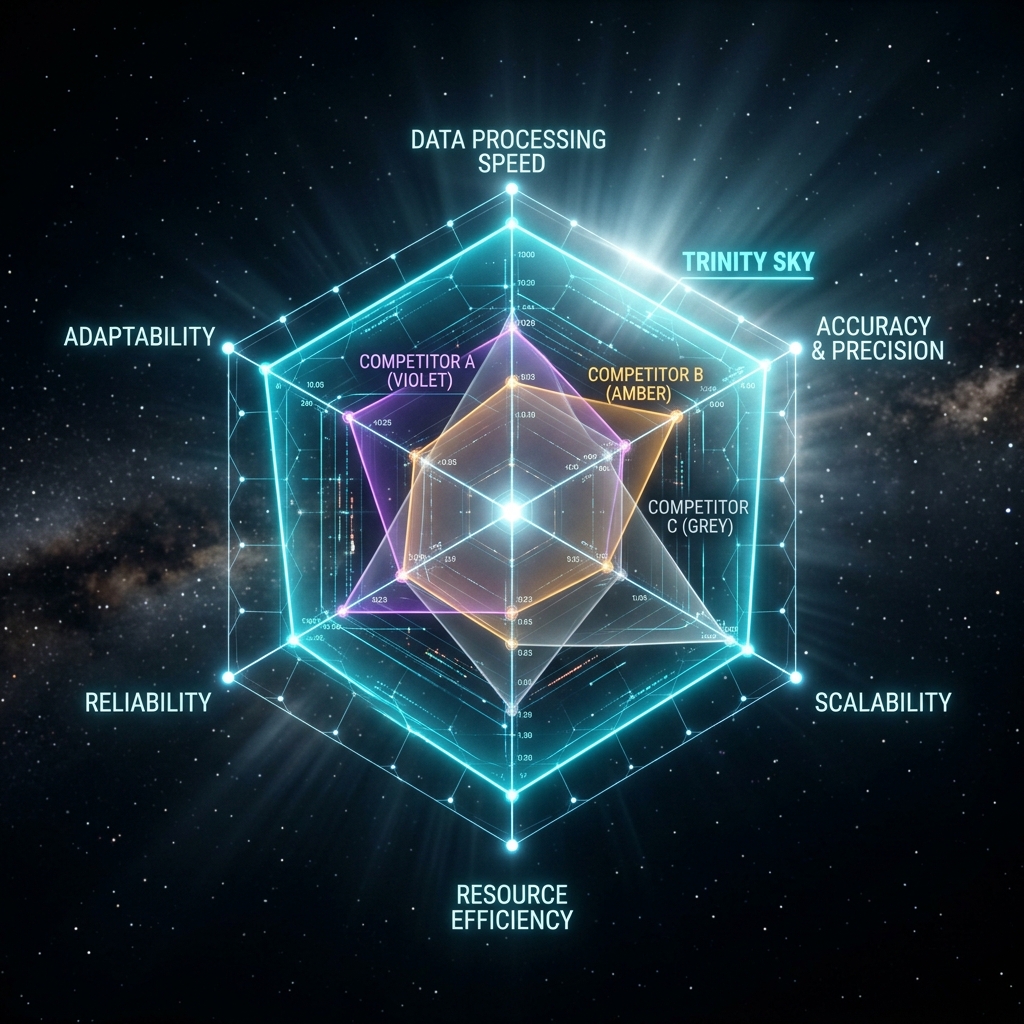
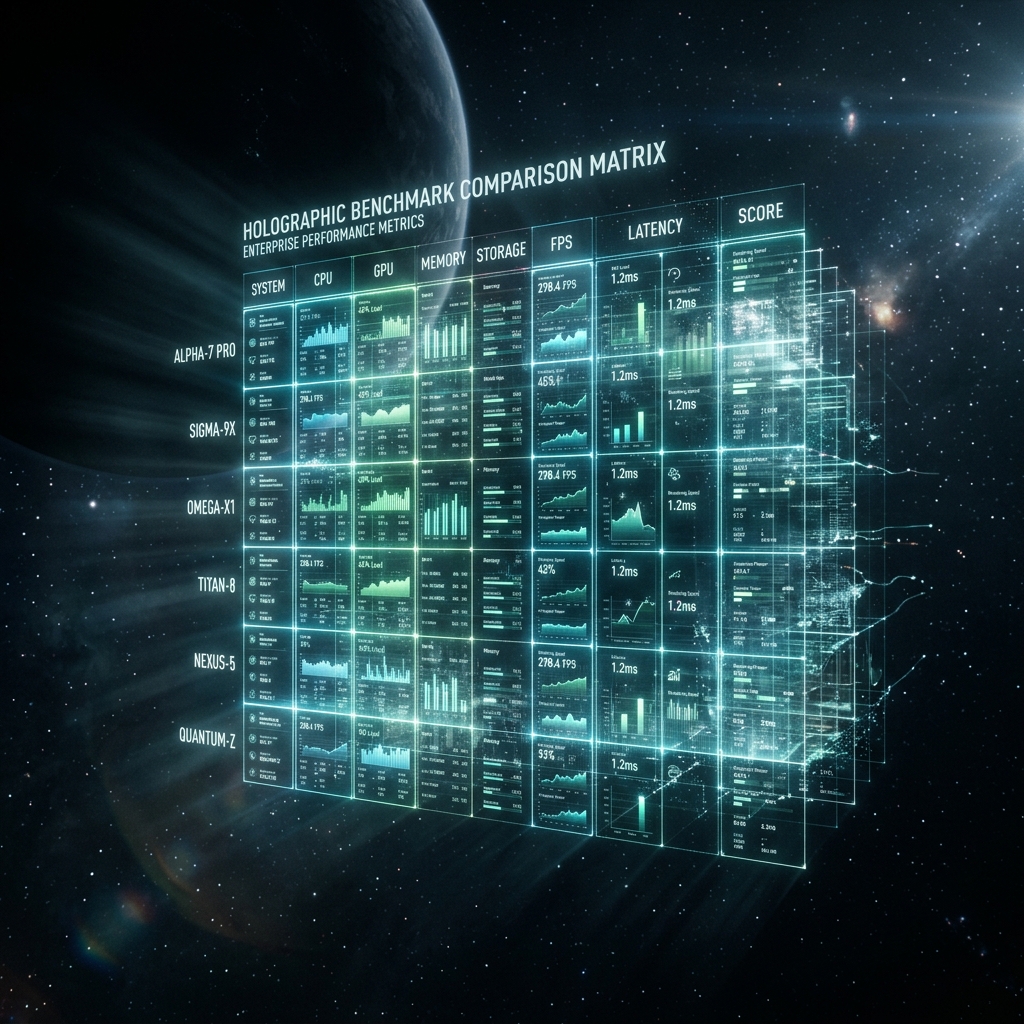
Evidence-bounded comparisons against RAG, vector databases, extended context windows, and weight quantization. Every claim is testable.
Benchmarks
Evidence-bounded comparisons against RAG, vector databases, extended context windows, and weight quantization. Every claim is testable.
Comparison 01
| Dimension | Trinity FHRR | RAG Systems |
|---|---|---|
| Recall Mechanism | Phase-conjugate algebraic unbinding | Embedding similarity search |
| Structured Relations | Role-filler binding | Chunk retrieval |
| Partial-Cue Recall | Native | Query reformulation needed |
| Temporal Ordering | Bound timestamps | No native model |
| Recall Latency | <132 μs | 100 ms – 1 s |
| Update Coherence | Bind + superpose | Re-index needed |
| Inspectability | Merkle + coherence score | Chunk metadata |
Comparison 02
| Capability | Trinity FHRR | Pinecone / Weaviate / Qdrant |
|---|---|---|
| Search Type | Algebraic unbinding | Approximate Nearest Neighbor |
| Composition | Circular convolution | Flat vectors |
| Dimensions | 16,384 (complex64) | 768 – 1,536 (float32) |
| Compression | qFHRR 16× | PQ / SQ (lossy) |
| Accuracy | 99.97% cleanup | 95–99% recall@10 |
| Sovereignty | Local / air-gap | Cloud-first |
Latency
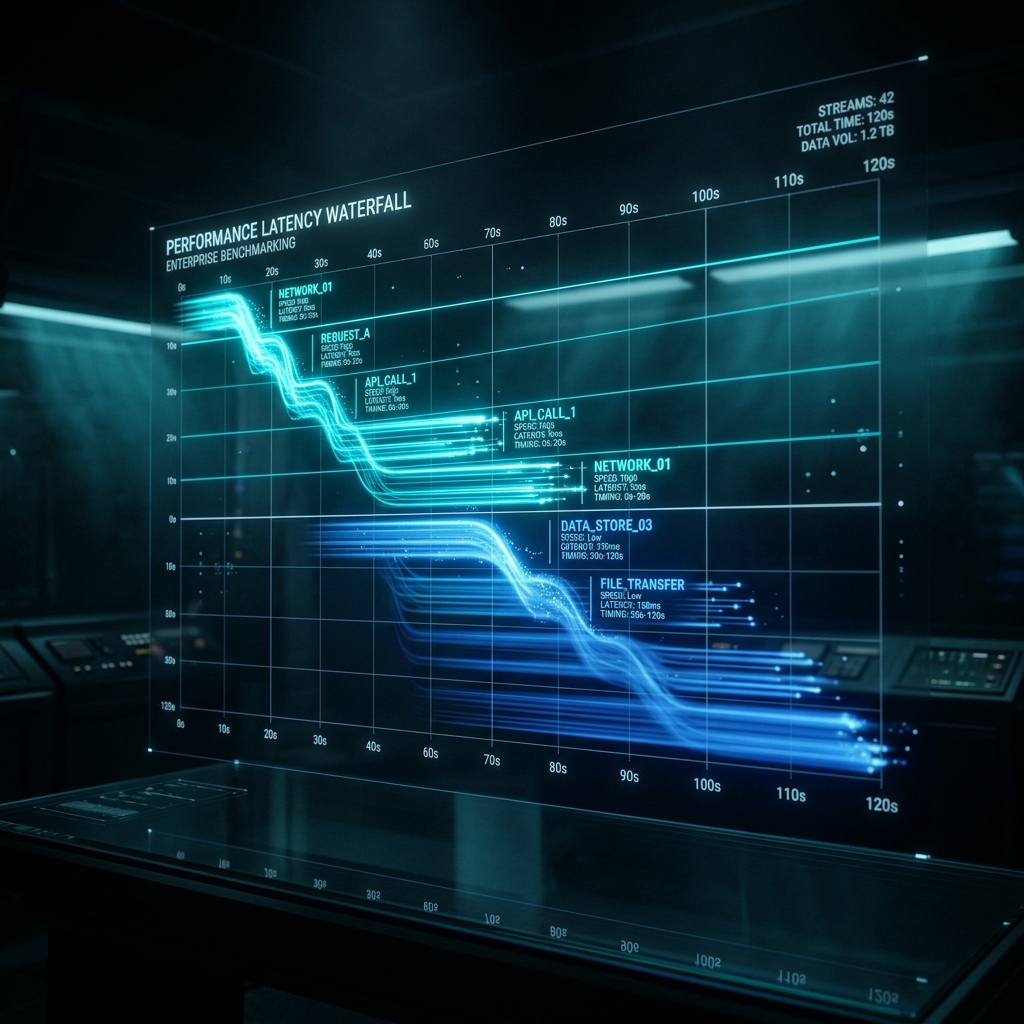
FHRR holographic recall at <132 μs (p99). RAG retrieval: 100 ms–1 s. Context re-attention: scales quadratically. At 30 Hz tick rate, only FHRR fits the budget.
Hallucination
LLMs hallucinate at 5.6–13.6% (benchmark-dependent). Trinity FHRR returns a coherence score with every recall — low-coherence results are gated before output emission.
Compression
Discrete cyclic group quantization (K=16 bins). 128 KB → 8 KB per vector. Integer-only arithmetic path. 0.987 fidelity retained. Fits in L1 cache.
Energy
M4 Max sovereign edge runs complete 30 Hz pipeline at approximately 30 watts. Compare: single A100 inference at 250–400W. Neuromorphic spikes: ~pJ per spike event.