Time is First-Class
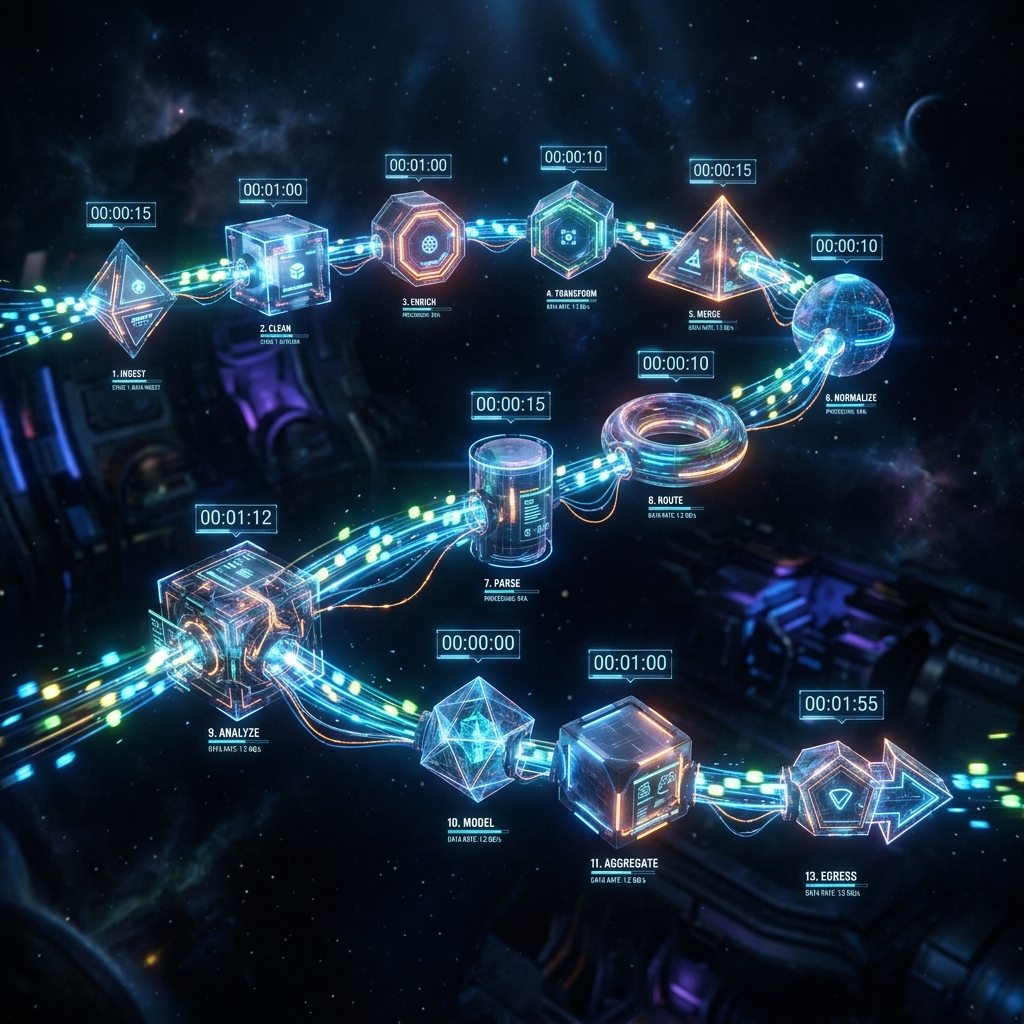
The 30 Hz consciousness pipeline enforces a 33 ms real-time budget across thirteen sequential stages. Intelligence is rhythmically coherent, not eventually consistent.
Technology Overview
Neuromorphic event streams. Holographic associative memory. Geometry-governed mesh routing. One biological clock. Zero surrender of data sovereignty.
A New Paradigm
Five architectural commitments that define the coherence platform.
The 30 Hz consciousness pipeline enforces a 33 ms real-time budget across thirteen sequential stages. Intelligence is rhythmically coherent, not eventually consistent.
FHRR binds structured concepts through circular convolution in Fourier space. Partial cues retrieve complete associations — the way biological memory works, not databases.
E8 lattice nearest-point decoding provides provably optimal error correction in eight dimensions. Mesh peers are located by geometry, not DNS round-robin.
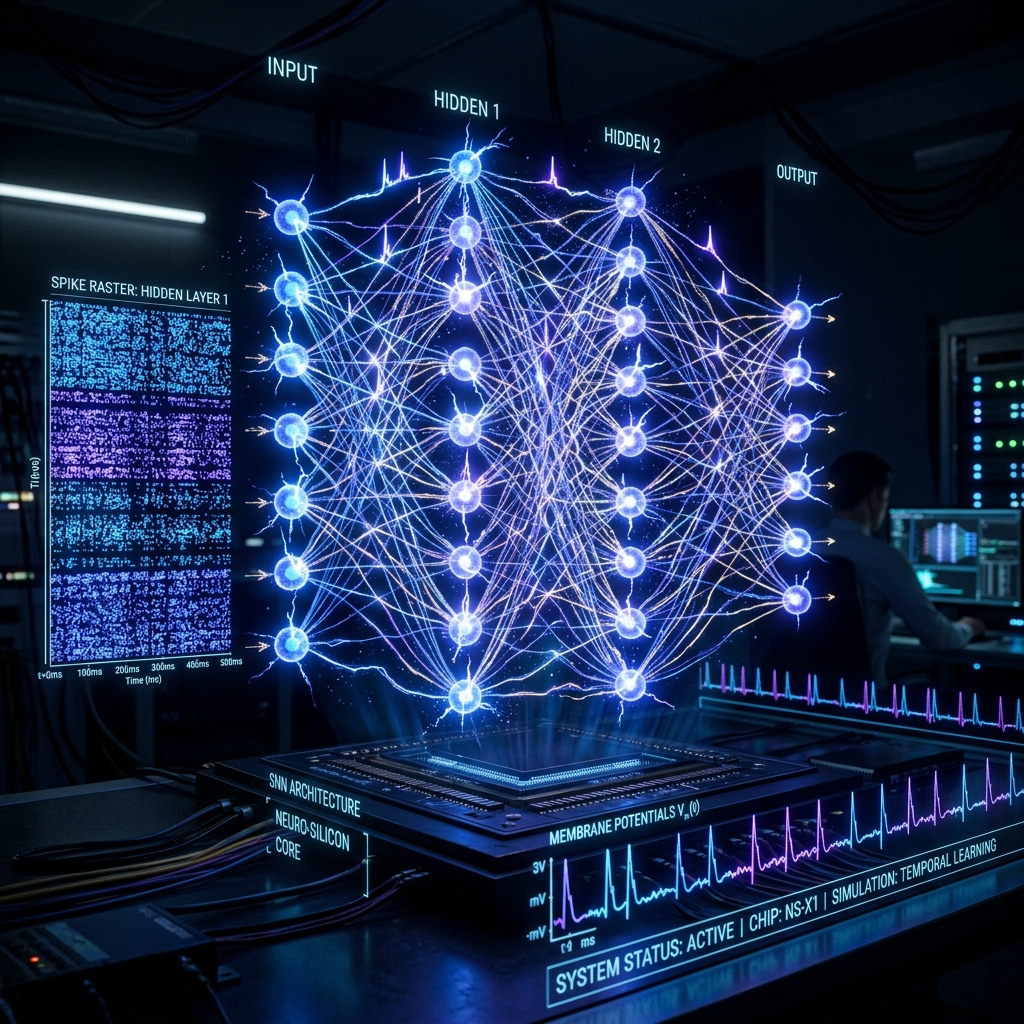
Spiking neural networks on Metal communicate through discrete spikes. Energy scales with information content, not with clock cycles.
Air-gap mode, local-first inference, and six-layer defense-in-depth are not features — they are load-bearing walls of the entire platform.
Seven Pillars
Each pillar is independently valuable; together they form a coherence platform no single pillar can replicate.
Pillar I
Thirteen stages within a 33 ms budget. Kuramoto synchronization through holographic recall to structured output — biological rhythm as a hard constraint.
Phase-lock oscillator populations across all agent nodes via CUDA/Metal kernels.
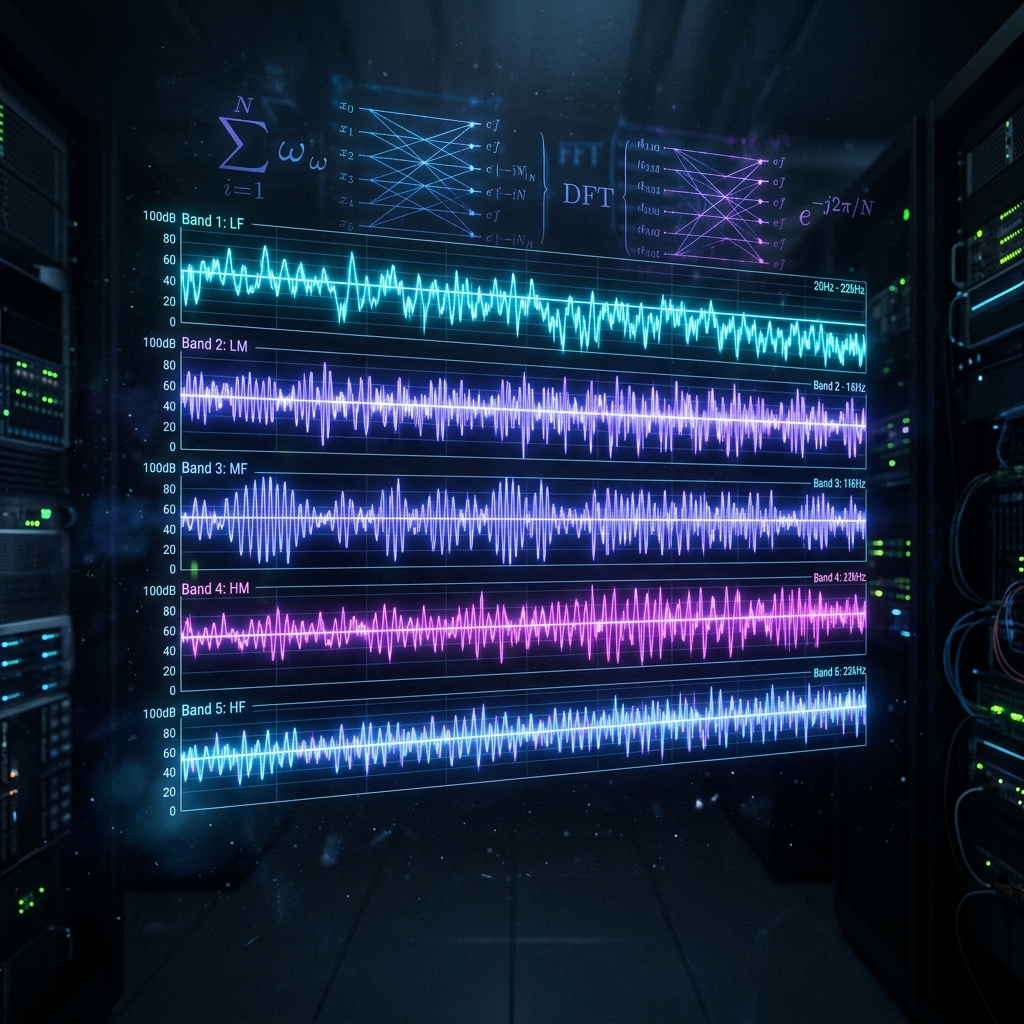
CUDA / MetalFourier decomposition of cognitive state via cuFFT / Apple Accelerate.
cuFFTFHRR bind-unbind retrieval with phase-conjugate memory access via Rust NIFs.
Rust NIFStructured response generation through Phoenix API after coherence audit.
Phoenix APIPillar II
Full neuromorphic stack on Apple Silicon through mlx-snn: 9 neuron models, 6 surrogate gradient functions, 8 spike encoding methods, Liquid State Machine reservoirs, and Loihi 2 bridge.
Pillar III
Fourier Holographic Reduced Representations replace flat vector stores with structured superposition. Algebraic unbinding, partial-cue recovery, and O(D / log D) capacity.
Pillar IV
240 root vectors in eight dimensions define the routing alphabet. Conway-Sloane decoder finds nearest E8 point in O(1). Stigmergic consensus via phi-decay pheromone CRDTs.
Pillar V
QAOA for coupling discovery, VQE for spectral stability, GBS for routing paths — all on classical GPU via Metal-Q and PennyLane. No quantum computer required.
Pillar VI
Six-layer defense-in-depth modeled on biological meninges: Dura Mater perimeter, Arachnoid routing, Pia Mater neural, Approval Gate, Secret Management, STRIDE test suite.
Pillar VII
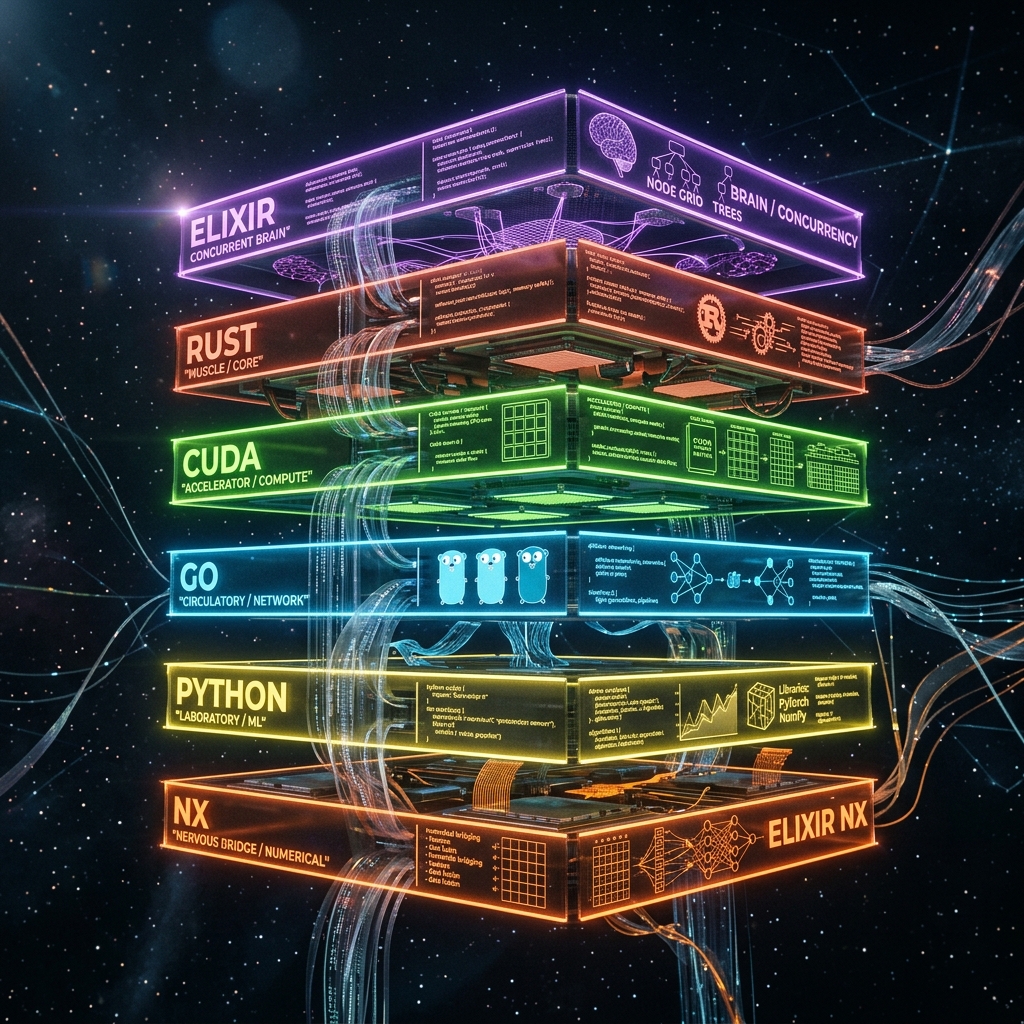
Rank‑1 LUV + symbolic ontology, then Nexus lowerings: Rust NIFs, Elixir OTP, Go sidecars, Metal/NIR/QIL, Python (MLX/MPS), TypeScript UI. Open LUV map →
Dual Substrate
The same cognitive stack runs on a $4K laptop or a datacenter rack.
| Component | Sovereign Edge (M4 Max) | Mesh Compute (GB200 Node) |
|---|---|---|
| CPU | 16-core (12P + 4E) | 2x Grace Neoverse V2 (72 cores each) |
| GPU | 40-core Metal 3 | 4x Blackwell RTX PRO 6000 |
| Memory | 48 GB LPDDR5 unified | 480 GB LPDDR5X + 384 GB GDDR7 |
| Bandwidth | 546 GB/s | ~7.2 TB/s aggregate |
| FP64 Pipeline | Accelerate AMX | 256-bit aggregate (4x 64-bit) |
| Primary Workload | Full cognitive stack | FHRR bare-metal, CUDA kernels |
| Power | ~30 W | ~2.4 kW |
| Sovereignty | Complete local | Mesh peer + local |
Common Questions
Dive deeper into memory, architecture, or download the technical reference.